
Specific deposition of RNA modifications is important for regulating gene expression1,2. 5-Methylcytosine (m5C) is a common epitranscriptomic modification, and NSUN2 is a key enzyme responsible for m5C methylation of various types of RNA. Dysregulation of NSUN2 is associated with numerous diseases, including cancers and neurological disorders3. The versatility of NSUN2 complicates our understanding of its substrate specificity and molecular roles in biology and disease. Here we show how NSUN2 interacts with RNA substrates at distinct stages of its catalytic cycle to modify cytidines. Furthermore, we show the role of RNA structure in facilitating NSUN2 activity at multiple tRNA positions. We identify RNA duplexes surrounding the m5C modification site as crucial recognition elements for methylation, which enabled us to derive a minimized substrate that captures the preferred features of an NSUN2 substrate—a dual-stem structure containing the CNNRR motif at the 5′ end of the first stem. Insights into the mechanisms underlying substrate-specific NSUN2 enzymatic activity provide opportunities for understanding and therapeutically targeting NSUN2-dependent methylation. Overall, our work highlights the roles of RNA structure and sequence in defining substrate specificity and regulating RNA-modifying enzymes. NSUN2 is an enzyme that adds a small chemical mark to RNA molecules and uniquely selects its targets based on specific sequence patterns and structural features.
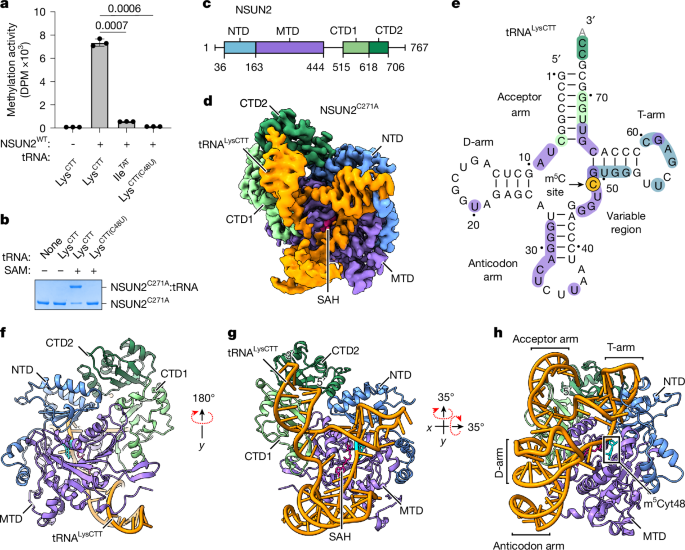
To understand the mechanism of NSUN2-mediated m5C modification of RNAs, we aimed to obtain an atomic model of the enzyme–substrate complex. We selected tRNAs as they are well-established substrates of NSUN2 (refs. 30,31) and are known for their stabl... [25155 chars]